
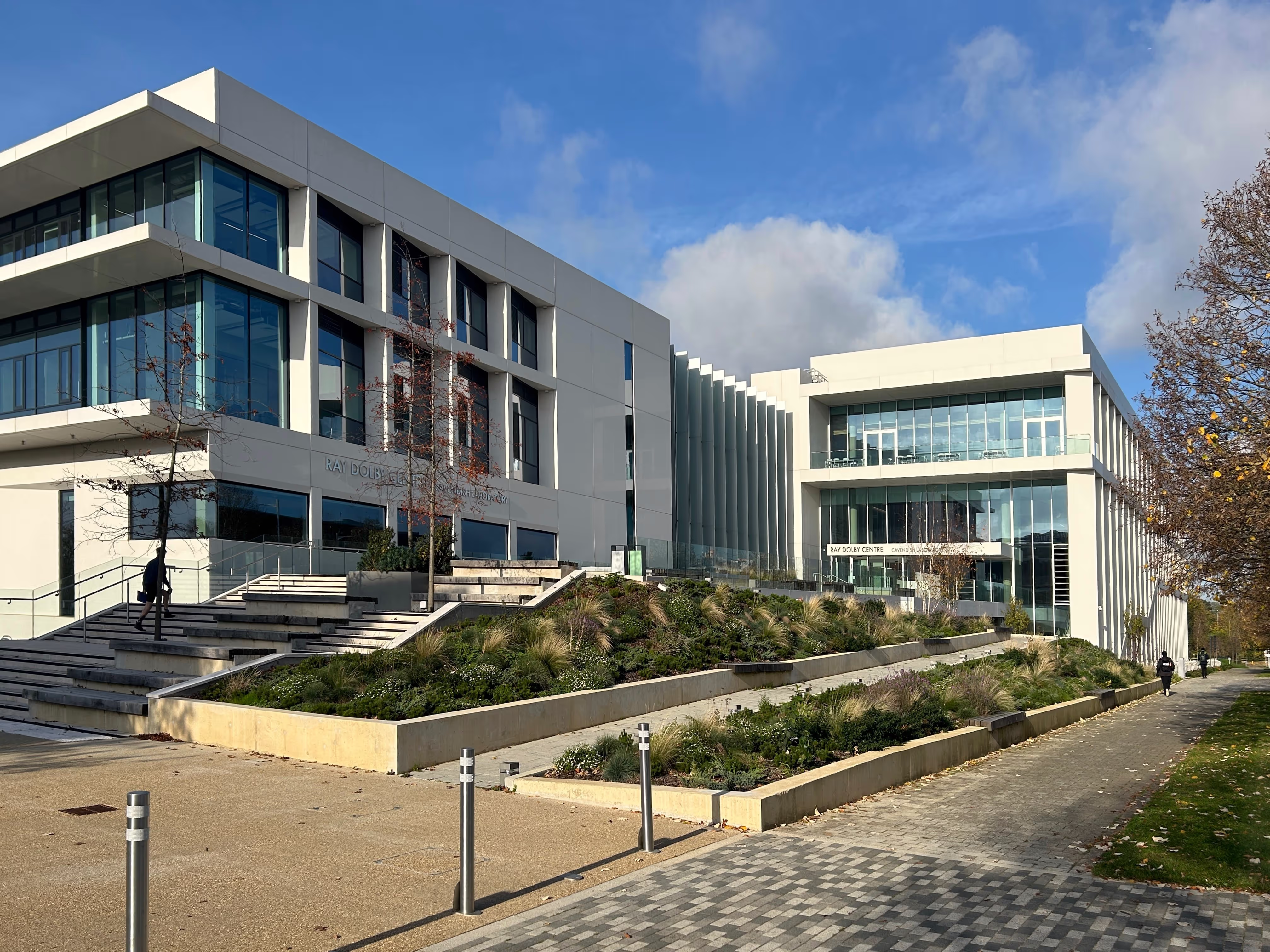
Potentially explosive experiments aren’t something that should be done in a tight space and the Cavendish Laboratory, which has been at the forefront of scientific advancements for 150 had already outgrown its premises once.
Unique scientific experiments require unique design solutions and now, as it embarked on its second relocation into a purpose-built, state-of-the-art facility fit for the 21st century, we came onboard to advise on how to ease movement across this complex, gargantuan building.
The building has a public access area and a restricted access area – where the science really happens. The building layout incorporates a long movement corridor that measures nearly two football pitches in length, to accommodate large-scale laboratories, and in many spaces there’s no natural light which significantly hampers natural orientation.


We provided wayfinding input, in collaboration with architect Jestico + Whiles. Key to a successful wayfinding strategy was getting to grips with the different labs, their functions and the precise terminology required, so we could avoid overwhelming visitors and reduce the number of signs required.
We helped build understanding of the building’s layout by devising a logical naming system and designing a system that uses simple floorplan diagrams to illustrate the routes to key spaces.
We also made sure our designs worked with the materiality of the building, which incorporates steel, concrete, timber and colour coding for the five wings to aid orientation.
Our scheme brings clarity and simplicity to a complex building, without detracting from the building’s breathtaking modern design.
It won a recommendation at the 2026 International Institute for Information Design (IIID) Awards.


